Getting Ultraprocessed Food Out of School Meals: What it Takes to Scratch Cook
In survey results published by the CDC in August, youth ages 18 and under consumed more than 60% of their daily calories from ultraprocessed foods.

;)
Education news and commentary, delivered right to your inbox.
Sign up for 社区黑料 newsletter.
Get stories like this delivered straight to your inbox. Sign up for 社区黑料 Newsletter
In April, U.S. Secretary of Health and Human Services Robert F. Kennedy Jr. turned the focus of his聽聽movement toward school food,聽聽鈥渕ajor, dramatic changes鈥� in school nutrition programs, which serve nearly聽聽across the country each year.
鈥淪chool lunch programs have deteriorated where about 70% of the food that our children eat is ultraprocessed food, which is killing them,鈥� Kennedy . 鈥淲e need to stop poisoning our kids and making sure that Americans are once again the healthiest kids on the planet.鈥�
The federal government is working to develop a of ultraprocessed foods, but they are to be industrially produced, ready-to-eat foods that contain high levels of sugar, salt, or additives, such as chips, soft drinks, and frozen meals.
Global consumption of ultraprocessed foods has in recent years. published by the Centers for Disease Control and Prevention in August, youth ages 18 and under consumed more than 60% of their daily calories from ultraprocessed foods.
Now, there is a associating ultraprocessed foods with negative health outcomes. In November, a found evidence that increased consumption of ultraprocessed food is a 鈥渒ey driver鈥� of escalating rates of diet-related chronic disease. The series authors to reduce the consumption of ultraprocessed foods, including by restricting ultraprocessed foods in school meals.
Federal efforts to of school meals have largely focused on implementing , which regulate nutrients like added sugars and sodium. However, these regulations don鈥檛 necessarily result in less ultraprocessed food 鈥� instead, manufacturers often to meet new thresholds. School nutrition programs, faced with tight budgets and limited staff capacity, often rely on ultraprocessed products like frozen pizzas, packaged sandwiches, and packaged breakfast pastries.
As the federal government and other entities work to reduce the consumption of ultraprocessed food, what will it actually take for schools to stop serving them?
鈥淥ur government right now has 鈥� more of a 鈥榯akeaway鈥� mentality,鈥� said Jayme Robertson, school nutrition director for and schools, regarding federal school nutrition standards. 鈥淚f you change that and instead focus on more fresh, more local, more raw ingredients, more scratch cooking, then that鈥檚 where the real impact is going to happen.鈥�
Robertson and other believe a paradigm shift is needed for schools to reduce ultraprocessed food and implement more scratch cooking, which involves preparing meals with whole, raw, or minimally processed ingredients. While data on the prevalence of scratch cooking is limited, the latest found that most school nutrition programs make less than 25% of meals from scratch.
鈥淲e need to stop penny pinching and start looking at the long-term outcomes of what serving less processed food in schools would produce. And we need to make sure our school districts have the resources they need to actually do this,鈥� said Mara Fleishman, CEO of the . 鈥淚f we want Americans to stop eating ultraprocessed food, let鈥檚 start in kindergarten.鈥�
The technical challenges of scratch cooking
Before scratch cooking can begin, school nutrition programs have to secure necessary equipment, hire staff with culinary expertise, purchase ingredients, and plan menus that meet federal requirements.
Equipment
鈥淲hen you go into schools that don鈥檛 have running water, don鈥檛 tell me to scratch cook,鈥� said Dr. Katie Wilson, executive director of the .
Many school nutrition programs cannot scratch cook due to limited or outdated kitchen facilities that prevent the storage, processing, or cooking of whole ingredients 鈥� such as a lack of coolers or freezers to store fresh ingredients.
Buying new equipment or renovating facilities can pose a major cost. School nutrition programs operate financially independently of school districts as self-sustaining, nonprofit enterprises. The roughly $4.60 per lunch provided by must be used to cover the cost of food, supplies, labor, equipment, and overhead costs, often leaving little room in the budget for large capital investments.
Even if a district can afford the upgrades needed to scratch cook, there may be additional hurdles to installing and using that equipment, particularly in older school buildings. For example, Wilson recalled speaking to a school nutrition director who spent $500,000 on equipment that hasn鈥檛 been used yet because there isn鈥檛 enough power in the school building to plug it in.
Staffing
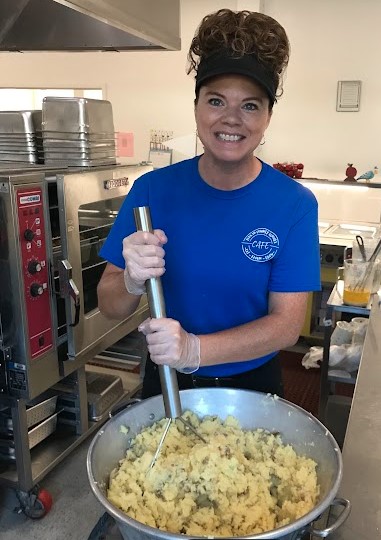
School nutrition programs often face聽聽staff. In a聽聽of school nutrition directors conducted by the School Nutrition Association (SNA) in 2024, nearly 89% of respondents reported challenges with staff shortages, and the overall vacancy rate was 8.7%.
To scratch cook, school nutrition programs not only need sufficient staffing levels 鈥� they also need to hire staff with the skills necessary to cook using whole ingredients, including knowledge of specific culinary skills, food safety, and equipment use. According to Wilson, the majority of school nutrition employees are not paid to attend training, making it difficult for them to build the skills needed to scratch cook.
鈥淚t鈥檚 about valuing food 鈥� valuing what they contribute to the school day and to the students鈥� life. We don鈥檛 value them, and that鈥檚 why they鈥檙e many times the lowest paid,鈥� said Wilson of school nutrition professionals compared to other school employees.
Ingredients
School nutrition programs often need to purchase more fresh, whole ingredients to scratch cook, which may involve developing new vendor relationships and executing new contracts. But this is not as simple as finding a local farmer to purchase meat and vegetables from, according to school nutrition leaders.
As recipients of federal funding, school nutrition departments must adhere to a variety of , which dictate what procurement techniques can be used based on the purchase amount.
According to Wilson, varying interpretations of federal procurement rules are one of the biggest challenges facing school food purchasing. This challenge is further compounded by the fact that, if a state or locality has different purchasing thresholds than the federal government, the more restrictive threshold must be followed.
鈥淚f everybody would get on the same page and just follow the federal standard rules, we could work at changing some of those federal rules to make them better for fresh, whole food,鈥� she said.
Menu plans
The U.S. Department of Agriculture (USDA) regulates the nutritional quality of school meals through , which dictate each required component of the meal 鈥� such as how many cups of different types of vegetables must be included 鈥� and place limits on calories, saturated fat, added sugar, and sodium.
Scratch cooking involves preparing recipes that rely on whole ingredients but still adhere to these requirements, which takes more planning and results in greater variation than purchasing pre-made, ultraprocessed items that already meet all requirements. If schools deviate from the meal pattern, they risk not receiving federal reimbursement.
鈥淲e have forced, particularly small districts 鈥� where they don鈥檛 have the money or the team to hire chefs or all these other people to help them with this 鈥� we鈥檝e forced them to buy pre-packaged, formulated food, because it guarantees they meet the meal pattern,鈥� said Wilson.
Wilson recalled that, during her time as a school nutrition director, scratch-made zucchini muffins were less than 0.1 ounces away from the required weight, disqualifying the muffins from counting as a meal component that day.
鈥淵ou can鈥檛 do scratch cooking if that鈥檚 what you鈥檙e under when it comes to the micromanagement of the meal pattern,鈥� she said.
The adaptive challenges of scratch cooking
Beyond the technical challenges facing scratch cooking, shifting away from ultraprocessed food and toward preparing meals from scratch requires change management. This presents a series of , or those related to shifting mindsets, values, and culture.
Through her work at the Chef Ann Foundation, which supports schools in implementing scratch cooking, Fleishman has seen that a strong commitment from school nutrition leaders is crucial to success 鈥� because scratch cooking isn鈥檛 easy.
鈥淚n many ways, it鈥檚 easier to pull a frozen chicken nugget out of the freezer,鈥� she said. 鈥淲hen you start building a scratch cook program, there is a lot of uplifting that has to be done. So you really need to be in it, you have to see the value of it, you have to believe in it, you have to be in it for the long term.鈥�
The Chef Ann Foundation 鈥渟ees the transition to scratch cooking as a continuum of gradual progress rather than an all-or-nothing approach,鈥� according to its , with a five-step continuum that ranges from ready-to-eat meals to scratch-made meals.
Fleishman said that moving along this continuum takes time, and schools often have to start small and introduce new scratch-made menu items gradually as they secure new equipment.
As Yadkin County and Elkin City schools transitioned to scratch cooking over the last five years, Robertson said she has worked intentionally to build trust and buy-in with her school nutrition team. In her first year as school nutrition director, she worked in school kitchens to build relationships, learn about the speed-scratch approach, and understand equipment and staffing levels.
鈥淚t really made sense for me to use that first year to observe, to learn, to really immerse myself in how the program was operating, instead of coming in and just making drastic changes,鈥� said Robertson.
Using lessons from that experience, she then created a menu committee and a managers council to ensure 鈥渂oots on the ground鈥� voices informed the district鈥檚 approach to scratch cooking. She said this created a structured way to gather feedback and troubleshoot plans before they were implemented.
鈥淚t gave everybody a voice at the table, and it got everybody on the same page in terms of the direction we were moving,鈥� she said.
School nutrition staff then participated in professional development where they watched new scratch-made recipes be prepared, providing them with a visual, step-by-step explanation of how to cook each component. Just like cooking at home, Robertson said that as staff cooked new recipes repeatedly, their comfort level grew.
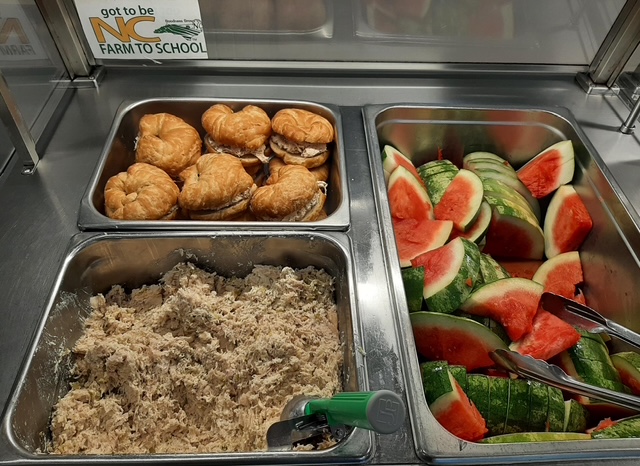
Fleishman echoed how important creating buy-in with school nutrition professionals is for the success of scratch cooking efforts.
鈥淚f you鈥檙e able to build a culture of professionalism and value within school food and help your team understand why cooking from scratch is so important and what the impact of their work will be, then you don鈥檛 necessarily get some of the pushback that you see,鈥� she said.
Then, once scratch-cooked items are available, there鈥檚 still work needed to shift students鈥� preferences away from the ultraprocessed foods they may be accustomed to eating.
鈥淚t鈥檚 not like they鈥檙e serving packaged, processed french toast sticks, and then you put the scratch-cooked french toast casserole on the menu and everyone鈥檚 like, 鈥榊eah I like this so much better,鈥欌�� said Fleishman. 鈥淯ltraprocessed food is highly addictive. So there is a period of transition.鈥�
Marketing to students and families that explains what scratch cooking is, why the school nutrition program is doing it, and why scratch-made items are healthier can help encourage students to try new items.
For example, Robertson shares new recipes through newsletters and on social media, highlighting which ingredients are locally sourced and tagging farmers. She also uses taste tests with students to ensure scratch-made items are things they enjoy eating.
The financial equation
While there鈥檚 a common perception that scratch cooking is more expensive than serving processed food, according to Fleishman, it doesn鈥檛 necessarily have to cost more. Although equipment purchases can pose a major cost, when comparing a scratch-made item directly with a processed counterpart, the scratch-made item may be less expensive or cost the same, depending on what ingredients are used.
鈥淚n reality, it could cost more 鈥� you could buy all organic, regenerative ingredients. But it doesn鈥檛 have to. You can scratch cook within the federal reimbursement rate,鈥� said Fleishman, adding that it鈥檚 crucial for school nutrition directors to have strong financial management skills in order to manage a sustainable scratch cooking program.
For example, in Yadkin County and Elkin City schools, Robertson said it costs roughly $1.10 per serving of the pre-made spaghetti sauce the district previously purchased, and it now costs $0.95 per serving to prepare a scratch-made sauce. In an of four school districts that participated in the Chef Ann Foundation鈥檚 Get Schools Cooking program, the 鈥渙verall financial health鈥� of school food programs increased after transitioning to scratch cooking.
Robertson has also leveraged strategic menu planning to purchase a core set of ingredients and cut down on unnecessary inventory. For example, she now purchases raw ground beef as a base protein for multiple scratch-made items 鈥� including spaghetti, tacos, and hamburgers 鈥� replacing several processed items.
What鈥檚 needed to support more scratch cooking?
Robertson compares trying to implement scratch cooking in the current policy and regulatory environment as 鈥減utting together a Jenga puzzle and hoping it doesn鈥檛 fall.鈥�
鈥淵ou鈥檙e asking employees that you鈥檙e not paying hardly anything to, to see these regulations through and provide an enjoyable experience. I feel like it鈥檚 just becoming harder and harder. It鈥檚 almost like you鈥檙e being asked to do more with less every single year,鈥� she said.
As more schools work to reduce ultraprocessed foods in school meals and implement scratch cooking, experts point to a variety of possible solutions.
Higher school meal reimbursement rates
As the costs of and continue to rise, many school nutrition programs find it difficult to provide school meals within the per-meal , which is roughly $4.60 for each free school lunch and $2.46 for each free school breakfast, with lower reimbursements for reduced-price and paid meals.
鈥淚 do not feel like students thrive on mini powdered donuts 鈥� but I know the mini powdered donut is more cost-effective, and it takes me less labor in the morning, and I don鈥檛 have the money to put into it,鈥� said Robertson.
In the of school nutrition directors nationwide, nearly all respondents cited challenges with the cost of food (97.9%), labor (94.9%), and equipment (91.4%), and only 20.5% reported the reimbursement rate is sufficient to cover the cost of producing a meal.
Low reimbursement rates can also make it difficult for school nutrition programs to recruit and retain staff. This is particularly true in areas with a higher cost of living where other food service jobs may pay employees a higher wage, making it difficult for school nutrition programs to offer a competitive wage.
Introduced in Congress in October, the would permanently increase the federal reimbursement rate for school meals, adding an additional 45 cents for each lunch served and an additional 28 centers for each breakfast served.
鈥淗igh costs and insufficient funds are hampering efforts to expand scratch cooking and reduce added sugar and sodium in school meals,鈥� said SNA President Stephanie Dillard in a about the bill. 鈥淪chool meal programs desperately need increased reimbursements to invest in staff and training, upgrade kitchen equipment, and purchase more fresh and local produce.鈥�
Funding for school kitchen equipment
Because school nutrition programs operate financially independently, local school districts often aren鈥檛 able to fund equipment for school kitchens. This means state or federal investments are needed to ensure schools have the equipment needed to scratch cook.
In previous years, the USDA has offered , but funds can only be used to cover the cost of the equipment and not the corresponding increase in energy or other utilities needed to use it, which Wilson said poses a challenge.
At the state level, California has allocated from the state鈥檚 general fund to provide funding for infrastructure upgrades and equipment in school kitchens, along with staff training, with the goal of helping more schools offer scratch-made items.
Investments in the school nutrition workforce
Investments are also needed to better recruit and train culinary professionals to work in school nutrition programs, school nutrition leaders said.
鈥淯nless we are able to fundamentally look at developing the greater workforce in school food, then a lot of the work that we鈥檙e all doing is kind of pushing this boulder up a hill, and it might come back down,鈥� said Fleishman.
To help meet these workforce needs, the Chef Ann Foundation developed the nation鈥檚 first for scratch-cooked school meals, currently available in Colorado, Virginia, and California, with more states to come. The apprenticeship programs provide aspiring and beginning school food professionals with the skills needed to create and manage scratch-cook school meal programs.
Adopting universal free school meals
Serving free meals to all students in school meals 鈥� along with 鈥� providing school nutrition programs with more federal reimbursement funds and giving them a better opportunity to enhance the food they are serving, including through scratch cooking.
Currently, 鈥� California, Colorado, Maine, Massachusetts, Michigan, Minnesota, New Mexico, New York, and Vermont 鈥� have passed permanent legislation that provides free school meals to all students. Dozens of other states, including North Carolina, have introduced bills that would do the same.
Funding for local food purchases
Given that scratch cooking requires school nutrition programs to use whole, raw, or minimally processed ingredients, funds to purchase local food for school meals can help offset the costs of scratch cooking while keeping school food spending in the local economy.
However, in March 2025, the USDA canceled $660 million for the . Started in 2021, the program provided funding to states to purchase local foods for use in schools, helping farmers sell more of their products to schools and expanding local and regional food markets.
Without this funding, schools face even greater , reducing the amount spent in the local agricultural economy and relying instead on large national wholesalers or distributors.
Looking ahead
Despite the challenges of implementing scratch cooking, Robertson said the shift to preparing more items from scratch has generated strong support from the local community, which has been fulfilling for her staff.
鈥淪taff members will get stopped in grocery stores, by parents or teachers, and they鈥檒l rave about a particular menu item they heard their child talk about,鈥� she said.
Robertson鈥檚 mom worked in public education, and she remembers a time when students enjoyed the food they were served in the school cafeteria. They would even ask for recipes.
鈥淚鈥檓 not sure when that stopped, but that鈥檚 kind of my ultimate goal 鈥� to get back to that and build those relationships,鈥� she said.
This first appeared on and is republished here under a .
Did you use this article in your work?
We鈥檇 love to hear how 社区黑料鈥檚 reporting is helping educators, researchers, and policymakers.