
Crying is Easy; Laughing is Hard
The science and wonder behind a baby鈥檚 laugh

;)
Education news and commentary, delivered right to your inbox.
Sign up for 社区黑料 newsletter.
The game of peekaboo is a universal language 鈥� and there鈥檚 way more to it than you might imagine.
You know the game: the big person covers their face with their hands or ducks out of sight. They鈥檙e gone! They suddenly reappear and say, 鈥淏oo!鈥� and the baby is delighted. This delight delights the big person, who does it again. Hilarity ensues; rinse, repeat, in a social interaction that, though nonverbal, is the back-and-forth, call-and-response of baby鈥檚 first conversational turn.
It is played in many languages (鈥淜uu Kuck Daa!鈥� in German; 鈥淚nai inai Ba!鈥� in Japanese); parents all over the world say that it鈥檚 right up there with tickling for eliciting baby laughter and is the funniest game they play with their babies.
For nearly a decade, baby psychologist Dr. Caspar Addyman has run the project for the University of London鈥檚 , collecting videos, stories and data from parents all over the world. His book, 鈥淭he Laughing Baby: The Extraordinary Science Behind What Makes Babies Happy,鈥� is a popular science book about baby psychology 鈥� a field that is much more sparsely populated than it ought to be, given the fact that babyhood is every human鈥檚 foundation for being in the world. In fact, realizing that is what led Addyman to be a baby psychologist in the first place.
鈥淚 picked babies because that seemed like the best place to start if you鈥檙e trying to understand people,鈥� Addyman says. 鈥淭hese are the crucial years. But as academics, we approach our research 鈥� academically: 鈥榃hen can they say their first word? When do they have their first concept? When can they tell male faces from female?鈥欌�欌�� Researchers are able to test infants鈥� learning through a tested-and-true method of making the babies bored by showing them the same thing repeatedly, then slipping in something different. For example, dog, dog, dog, dog, then suddenly, cat. In observing his infant niece, he thought he might have stumbled on another means of getting the data, but soon realized that babies only laugh when they get the joke. You can鈥檛 fake it with a baby, and they won鈥檛 fake it with you (except when they get a bit older and are completely bored with your silly peekaboo and feign a little laugh to be polite. A different story for another time). A stranger popping into a lab and trying to make a baby laugh is, from the baby鈥檚 perspective, pretty weird. They have a nose for manipulation and if it isn鈥檛 spontaneous? No ignition.
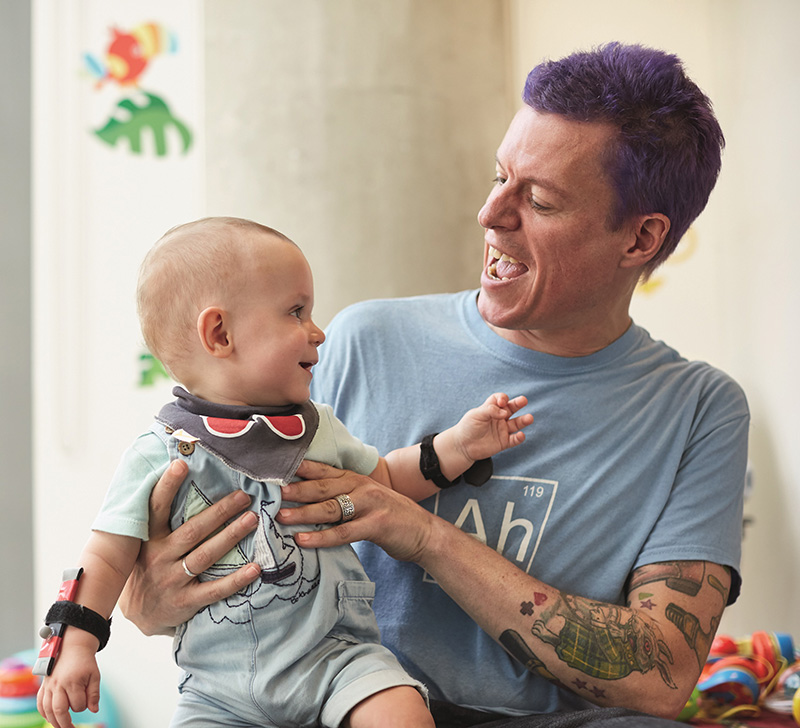
Babies laugh a lot, and most researchers don鈥檛 pay attention to that. Psychology has often been more focused on pathology 鈥� what鈥檚 wrong, what happened and how can it be prevented 鈥� rather than really looking at happiness and lives that are flourishing. Addyman decided to take babies鈥� laughter seriously and soon realized how deep a vein of research gold he had struck.
Humans evolved to be completely helpless at birth. In much of the animal kingdom, within minutes or hours of birth, the young animal is able to stand, walk and keep up to some degree with the group. Human infants have a long period of complete dependency, and during that time it is crucial to their survival that adults care for them through an extended development period. The success of human survival is more than anything social success.
鈥淚t really does take a village to raise a child,鈥� Addyman says. 鈥淲hen we were hunter-gatherers in the African savannah, it took the whole village to survive as a group and raise every child. The success within that is getting on with everybody else.鈥� It pays for a helpless little creature to be beguiling: smiles and laughter are the social lubricant that bind the baby to the group.
As survival strategies go, beguiling is a great one. The act of nursing, having one鈥檚 diaper changed or playing peekaboo, create delicious opportunities for social bonding. Babies become aware at a very early age of that heady rush when they hold another鈥檚 gaze, and they can do so for a surprisingly long time. Think about a time you swapped glances with a potential romantic partner and felt that rush of reward if the glance became mutual, Addyman says. Maintaining that connection is a matter of survival for human infants, and in this case, survival can be a lot of fun.
In fact, he says, researchers have found that the brainwaves of baby and adult become synchronized when there is mutual eye contact. The game of peekaboo is an extension of this mutuality. When the big person goes away briefly, there鈥檚 a moment of suspense as the baby wonders what鈥檚 happened, where did my person go? When their person pops back into view, the baby is joyful to see them, but also 鈥� most important from a developmental perspective 鈥� the baby鈥檚 hypothesis that they actually were coming back has been supported. Babies are scientists, Addyman says, and their entire existence practically from birth is positing one hypothesis after another. Part of the joy of peekaboo is the triumph of a prediction confirmed. Yesss! I knew she鈥檇 pop back up. She always does! We all love being right.
The game of peekaboo starts out very simply and doesn鈥檛 even require that the big person completely disappear. With very young babies, the surprise of withdrawing out of the field of vision 鈥� not well developed at this point 鈥� then coming in close is a big surprise. When the experience is repeated, and the baby observes the big person鈥檚 delight at their response, the child quickly catches on and game on! As baby grows, the game grows with them, and by six months, peekaboo is the best game there is, the adults are tweaking their comic timing and the game is rewarded with lots of big people smiles and baby belly laughs.
And babies do belly laugh, though not right away. For ages, psychologists and the medical establishment have held that what looks like smiles in babies younger than six weeks is actually gas and isn鈥檛 a communication of any kind. Addyman points out that these same experts have no trouble believing that babies鈥� crying is a form of communication. Believe the parents, he says: babies smile very early in response to pleasure, and infants three months old and younger, laugh.
鈥淚 have videos parents have sent me of much younger babies laughing,鈥� he says, 鈥渁nd it鈥檚 a very delicate, breathy sound. It鈥檚 not a full guffaw because their lungs aren鈥檛 really ready for that. Crying is easy, you just have to go ahhhhhhhh and take a breath and ahhhhhhhh. It鈥檚 all one thing. Laughter is an in-out, in-out, ha-ha-ha and it鈥檚 harder to achieve.鈥�
The whole time a baby is engaged in this way with the big people is a moment of pure social connection and pure learning for the child, Addyman says. Babies don鈥檛 laugh when they鈥檙e by themselves; it鈥檚 all about the interaction. They鈥檙e learning not only from the adults but from themselves. They realize the can do something and it will have a dependable effect. I laugh, mommy laughs back and hugs me 鈥� hmmm. This has promise. It is, he says, their first taste of a sense of agency and they like it.
After more than a decade of studying what makes babies happy, Dr. Caspar Addyman has come up with some simple core lessons for those of us who would like more happiness in our lives. If baby can do it, we can too:
1. Have great, mutually safe relationships in which you let people know you care about them and you allow them to care about you.
2. Keep challenging yourself and achieving new knowledge and skills.
3. Be here now. Babies are little Zen masters for whom the present is all there is 鈥� and they are delighted to be here. Be more like babies.
As wonderful as babies鈥� laughter is, Addyman says, it also has its limits. Babies like things that surprise them; they don鈥檛 like actually scary things. Excitement and fear both cause our bodies to react in a similar way, releasing adrenaline and getting our hearts racing. Adrenaline prepares us to react. When the situation turns out not to be dangerous after all, there鈥檚 a sense of relief and excess energy to be expended 鈥� in a baby belly laugh.
When tickling a baby or paying peekaboo, it鈥檚 essential that the adult pay close attention to the child鈥檚 reactions. The little one can鈥檛 say, 鈥淥k, I鈥檝e had enough now. Lay off.鈥� They may look away or tire of the game, a signal that tears may come soon if their communication isn鈥檛 needed.
鈥淏abies are not great at controlling what they can and can鈥檛 do,鈥� he says. 鈥淪o especially with things like tickling, you have to pay proper attention and know when you鈥檙e pushing them too far. Laughter means let鈥檚 keep this going; tears mean time to stop. The child鈥檚 laughter isn鈥檛 just a toy for your amusement.
鈥淭he best way to make a baby laugh is to take them seriously and remember that all the way through the interaction. You鈥檙e not playing the clown to get validation from the baby. That鈥檚 definitely a temptation for parents, especially with the mobile phone in their hands.鈥�
Babies find men and women equally funny, according to Addyman鈥檚 survey. Nobody scores the highest, though, he says, 鈥淢ums might feel like, 鈥業鈥檓 there more often, so pro rata, shouldn鈥檛 I be getting more laughs?鈥欌�� Though babies do develop their individual tastes, he says his research hasn鈥檛 identified any preference for particular members of the family. If someone is playing with baby and they鈥檙e laughing, baby is happy.
鈥淥ne thing I can tell you that鈥檚 different from adults,鈥� he says. 鈥淎dults find cats very funny. Babies think dogs are hilarious.
鈥淐ats? Not so much.鈥�
This story originally published on Early Learning Nation and is now archived on 社区黑料. Learn more here.
K.C. Compton worked as a reporter, editor and columnist for newspapers throughout the Rocky Mountain region for 20 years before moving to the Kansas City area as an editor for Mother Earth News. She has been in Seattle since 2016, enjoying life as a freelance and contract writer and editor.
